From Exhaustion to Flow: A Shiatsu Perspective on Burnout
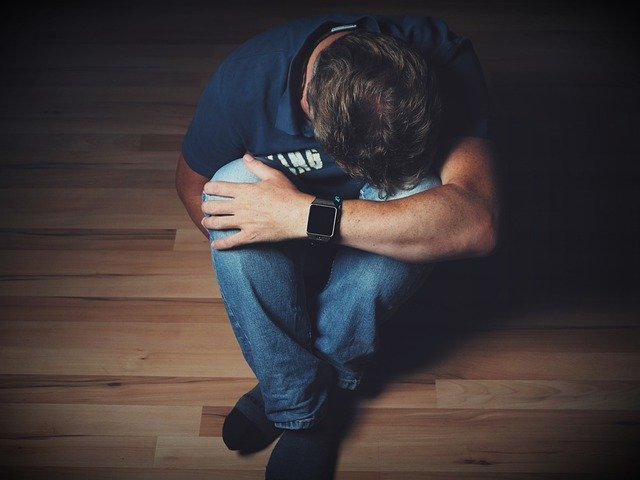
Everyone knows that moment when the body says no but the mind keeps whispering yes. We picture ourselves as solid, unbreakable, driven by an endless supply of motivation. And then one morning, without warning, everything tilts: energy has evaporated, gestures turn mechanical, joy retreats like the tide at low water. Burnout isn’t just extreme fatigue — it is a silent rupture, a loss of dialogue between what we do and who we are. And what if, behind this profoundly modern phenomenon, lies a much older question — the question of Ki flow?
When Ki Slips Away: Anatomy of an Inner Collapse
Burnout is often described in psychological terms: workload, social pressure, perfectionism. Yet those who have lived through it speak of something far more intimate, almost physical — as if energy drains from the legs, as if the breath gets stuck beneath the ribs, as if the hara collapses inward.
From a shiatsu perspective, this image is strikingly clear: burnout separates the upper and lower body, the mental agitation from the physical grounding. Too much yang, not enough yin. Too much drive, too little rest. The whole organism loses coherence.
Breathing becomes shallow, thoughts spill over, feelings go numb. The head blazes while the belly empties. This imbalance writes itself into the meridians: Heart and Triple Heater become overstimulated, while Kidneys and Spleen slowly burn down, like embers left unattended.
Burnout is not just a fall — it is a fragmentation of the vital movement.
When Shiatsu Listens to Exhaustion: The Viennese Experience
In Vienna, the work led by Mike Mandl and the International Academy for Hara Shiatsu gave shape to what many practitioners suspected — and offered practical therapeutic routes. Between 2012 and 2013, the team accompanied 90 individuals experiencing burnout, providing nearly 900 treatments over ten-week cycles.
The results leave little room for doubt: 58% reported a strong improvement in energy, while over half experienced a marked emotional shift. Even more telling, 92% were satisfied with the treatment.
Numbers, yes — but behind them, stories of breath regained, of deeper sleep, of that fragile moment when life begins to pulse again beneath the hands.
Mike Mandl captured the situation in one striking sentence:
“In extreme conditions yin and yang are separated. A huge lack of energy on one side and massive tension on the other.”
In other words: you cannot fill a leaking vessel — you must first mend unity.
At the Heart of the Session: Holding, Listening, Letting Return
In shiatsu treatment for burnout, technique matters less than the quality of contact.
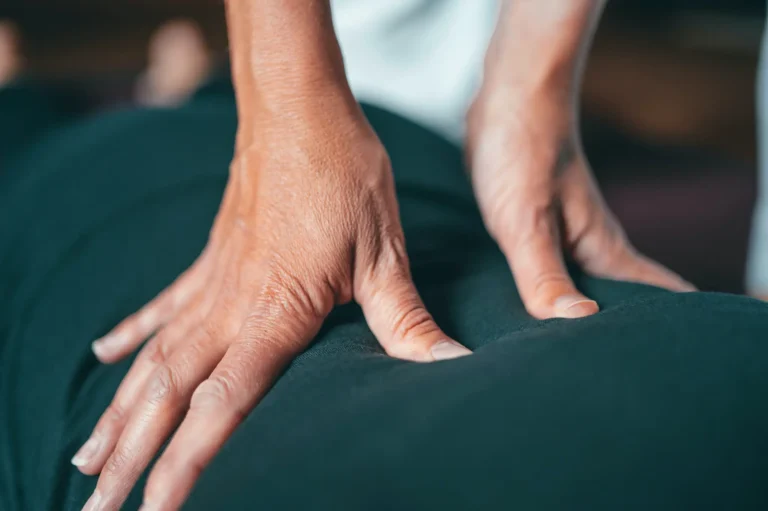
The aim is not to do something to the body, but to create space in which it can gradually reorganize itself. The hand does not push — it accompanies, receives and aligns.
Work often begins by restoring the depth of the Kidneys, the silent guardians of vitality. The Spleen is then invited to reclaim its role of anchoring and stability, like soil retaining the roots. The Heart is soothed without being smothered, and the Triple Heater gently releases its vigilance. Always, we return to the hara — that forgotten center each person carries like an ancestral homeland.
Little by little, energy descends, breath widens, life returns.
It is not spectacular. Sometimes it is barely noticeable.
But within this almost-nothing lies the first step home.
Relearning Rest: The Invisible Work
True recovery does not arrive in one session, nor in ten. It requires the body to relearn what modern life made it forget: the art of slowing down, the permission to do nothing, the trust that stillness is not danger but nourishment.
When agitation quiets, the person rediscovers that they are not merely a bundle of thoughts and tasks, but a rhythmic being, moving with the same pulse as the seasons.
Then subtle transformations emerge: deeper sleep, shoulders dropping, a clearer sense of hunger and fatigue, the unexpected ability to say no without shame.
Burnout is not weakness. It is a reminder.
We can only give what we still possess.
Conclusion: Returning to the Movement of Life
Shiatsu offers no miracle cure for burnout, but it does offer a path — a path of attention, contact, and returning to oneself. It helps reconnect with that invisible thread linking us to our own energy — not to perform more, but to inhabit what we do with presence.
Real recovery is not about holding on longer, but about reuniting what keeps us standing.
And because the world keeps changing, because we keep changing with it, this search is never truly finished.
That’s why learning, practicing and exchanging remain essential — for ourselves, for others, for our profession.
We will speak of this again — deeply, openly, urgently — at the next Balkan Shiatsu Summit.
There, burnout will not be an end point, but a doorway into what lies beyond: how to help, how to transmit, how to keep growing together.